BSLBATT Appoints Amperium as Exclusive Lithium Battery Distributor in Mexico
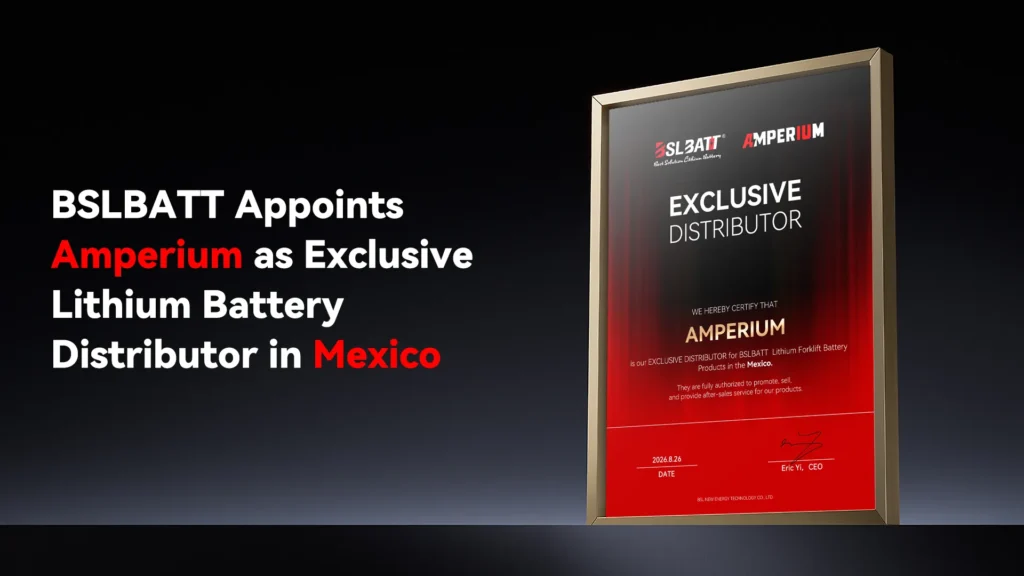
BSLBATT has officially appointed Amperium as its exclusive lithium battery distributor in Mexico on September 2, 2026. With over ten years of cooperation and shared expertise in lithium battery solutions, BSLBATT and Amperium will strengthen local technical support, customer service, and lithium technology adoption across Mexico and Latin America. September 2, 2026 — BSLBATT has […]
What Is Depth of Discharge (DoD)? A Practical Battery Guide
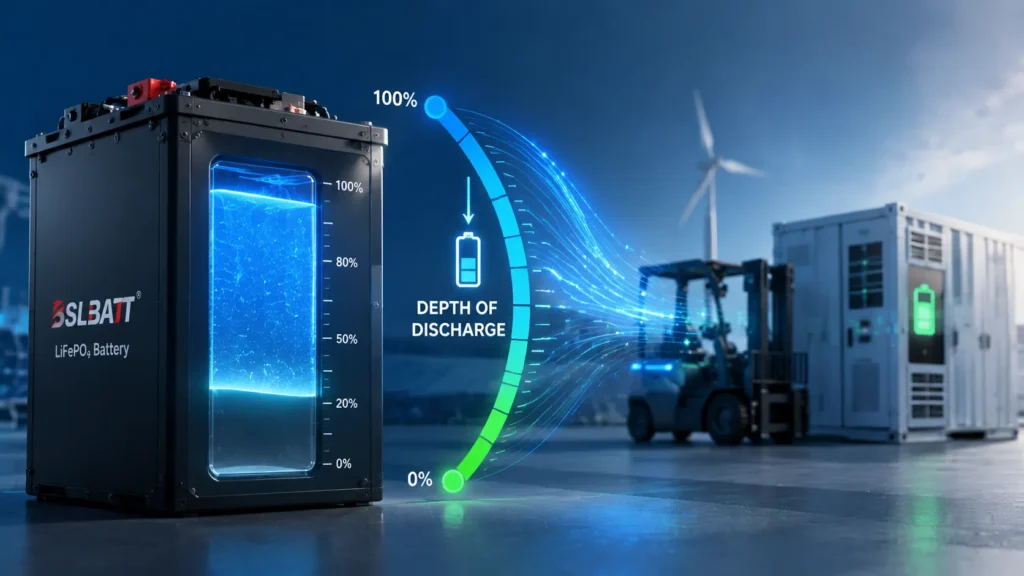
Depth of discharge (DoD) is one of the most important factors determining battery lifespan, usable capacity, and total ownership cost. For commercial energy storage and industrial equipment, choosing the right DoD can mean the difference between replacing batteries every few years and achieving thousands of reliable cycles. This metric represents the percentage of total capacity […]
How to Choose the Right Forklift Battery?

Choosing the right forklift battery depends on four core variables: battery chemistry (lithium-ion vs lead-acid), voltage compatibility with your equipment (24V, 36V, 48V, or 80V), operational demand (single-shift vs multi-shift), and total cost of ownership over the battery lifecycle. Lithium-ion batteries deliver 3,000+ charge cycles compared to 1,000 to 1,500 for lead-acid, require zero water […]
BSLBATT Launches Fully Automated Smart Factory for Forklift Battery Manufacturing

BSLBATT has completed the upgrade of its forklift battery production facility into a fully automated smart factory covering cell sorting, module assembly, pack integration and final testing. The upgrade introduces robotic assembly, laser welding, machine vision inspection and digital production management, reducing delivery time by approximately 30%. The facility supports BSLBATT global expansion across forklift […]
LFP vs NMC Battery: A Technical Comparison of Cycle Life, Safety, and Cost

LFP (lithium iron phosphate) and NMC (lithium nickel manganese cobalt oxide) are the two dominant lithium-ion chemistries in commercial energy storage. LFP offers a cycle life of 4,000 to 10,000 cycles, a thermal runaway threshold near 270°C, and lower material cost due to the absence of cobalt and nickel. NMC delivers higher energy density of […]
How Does a Battery Energy Storage System Work

A battery energy storage system works by converting electrical energy into chemical energy for storage, then converting it back to electricity when needed. During charging, lithium ions move from the cathode to the anode inside each battery cell, storing energy as chemical potential. During discharge, the ions reverse direction, releasing electrons as usable current. The […]
EU Battery Regulation: Requirements and Timelines for Industrial Battery Procurement

Regulation (EU) 2023/1542 establishes a phased compliance framework for all batteries placed on the European market, covering CE marking, carbon footprint declarations, supply chain due diligence, and the Digital Battery Passport. For industrial battery buyers and importers, understanding which obligations are already in force and which take effect through 2027 is essential for avoiding market […]
What Is BESS? Comprehensive Guide to Battery Energy Storage Systems
BESS stands for Battery Energy Storage System, a technology that stores electrical energy in battery cells and discharges it on demand to match supply with consumption. A typical commercial BESS consists of four core components: a battery pack (most commonly lithium iron phosphate chemistry), a battery management system, a power conversion system, and an energy […]
What Is the SOC of a Battery and Why It Matters for Industrial Operations

The SOC of a battery, or state of charge, is a percentage value that shows how much usable energy remains in a battery at any given moment. For industrial operations that depend on battery-powered equipment, understanding SOC is essential for scheduling charges, preventing damage from deep discharge, and calculating total cost of ownership. This article covers how SOC is defined, how it is measured, where it matters most in B2B applications, and why lithium battery systems offer more reliable SOC data than lead-acid alternatives.
What Does Commercial Battery Storage Cost in 2026?

Commercial battery storage costs in 2026 range from approximately $110/kWh for large-scale 4-hour duration systems to $580/kWh for smaller installed commercial configurations. The total cost of a system depends on battery chemistry, discharge duration, system capacity, installation complexity, and geographic market. For businesses evaluating energy storage procurement, understanding total cost of ownership (TCO) rather than upfront capital expenditure is the more reliable basis for investment decisions.