Lithium-ion and lead-acid forklift batteries differ significantly in lifespan, charging performance, maintenance requirements, and total operating costs. This guide compares LiFePO4 lithium forklift batteries with traditional lead-acid batteries, highlighting key differences such as 3,000+ cycle life versus 1,000–1,500 cycles, faster charging capability, opportunity charging support, and reduced maintenance needs. It helps warehouse and fleet managers evaluate which battery technology better fits their operational requirements.
When considering maintenance, safety, and cost, many experts argue that lithium-ion batteries are superior for most forklifts. Choosing the right battery can enhance your operations and lead to savings over time. While most forklifts still rely on lead-acid batteries, which account for about 77% of the market, lithium-ion batteries are gaining popularity each year.
Business owners and managers seeking safe, cost-effective, and low-maintenance batteries should examine the differences between Lithium-ion vs Lead-acid Forklift Batteries.
Feature | Lithium-ion Batteries | Lead-acid Batteries |
|---|---|---|
Lifespan | 1,000 to 1,500 cycles (5 years) | |
Charging Time | Fast charging, less than 1 hour/week | Longer charging times |
Maintenance | Minimal (no watering or cleaning) | Requires regular maintenance |
Operational Downtime | Reduced due to fast charging | Higher due to maintenance needs |
Cost Over Time | Lower total cost due to longevity | Higher total cost due to frequent replacements and maintenance |
Lithium-ion vs Lead-acid Forklift Batteries Overview
Lead-acid Battery Basics
Lead-acid batteries have been used in forklifts for many years. They work by using lead plates and sulfuric acid to make energy. Many warehouses pick lead-acid batteries because they cost less at first. These batteries can work in hot or cold places. They are good for cold storage too. But lead-acid batteries need a lot of care. Workers must check the water inside often. They also need to clean the battery ends. Workers must do equalization charging sometimes. Charging these batteries takes a long time. This can slow down work in busy places.
Lithium-ion Battery Basics
Lithium-ion batteries use new chemistry to give power better. They store energy with lithium compounds. This gives them more energy in a smaller size. Lithium-ion batteries last longer than lead-acid ones. They do not need much care. You do not have to add water or clean them a lot. Charging is much quicker, often under an hour. Workers can charge them anywhere in the warehouse. This saves time and space. These batteries do not make gases when charging. This makes them safer to use inside.
Key Differences
The biggest differences between Lithium-ion and Lead-acid Forklift Batteries are in their chemistry and how they work. The table below shows these differences:
Comparison Factor | Lithium-ion Batteries | Lead-Acid Batteries |
|---|---|---|
Energy Density | Higher, longer runtimes | Lower, shorter runtimes |
Charging Time | Fast, less downtime | Slow, more downtime |
Lifespan | 10-12 years | 5-6 years |
Maintenance | Minimal | Regular watering and cleaning |
Efficiency | More efficient, delivers more power | Less efficient, lower power output |
Temperature Sensitivity | Sensitive to extreme temperatures | Better tolerance to temperature changes |
Safety | No gas emissions, safer charging | Emits gases, needs special charging areas |
BSLBATT forklift lithium batteries deliver longer runtime, faster charging, and lower total ownership costs for modern material handling operations.
Explore More SolutionsForklift Battery Maintenance

Lead-acid Battery Maintenance
Lead-acid batteries need a lot of care from workers. Staff must check the fluid in each cell often. They use special water to fill up cells when needed. See-through cases help workers watch the water level. Workers should add water after charging the battery. They must check water every five times they use the battery. If the fluid gets low, they add more pure water.
Equalization charging is very important for these batteries. This step clears off crystals and keeps the battery working well. Workers do this about once a week for wet-cell batteries. These jobs take time and need good planning. Staff also have to watch the battery’s heat and let it cool down.
Regular jobs for lead-acid batteries are:
Checking fluid every week
Equalizing the battery every week
Adding water after charging
Cleaning ends and checking for rust
Lithium-ion Battery Maintenance
Lithium-ion batteries are much easier to care for. They come sealed and do not need much work. Staff do not have to check fluids or add water. Equalization charging is not needed. These batteries do not make gas when charging. Workers do not need to worry about venting. With less work, staff can focus on other warehouse jobs.
Lithium-ion batteries give you:
No need to add water or check fluids
No equalization charging
No cleaning of ends
Very little work needed
Lithium-ion vs Lead-acid Forklift Batteries: Maintenance
Lithium-ion and lead-acid batteries need different care. Lead-acid batteries need lots of work like watering, equalizing, and cleaning. These jobs take workers away from other tasks and cost more money. Warehouses need more people and time to care for lead-acid batteries. When these batteries need service, work slows down.
Lithium-ion batteries do not need much care. Workers spend less time on batteries and more time working. The sealed case and fast charging mean fewer stops. Warehouses have fewer delays and can get more done with lithium-ion batteries. For more details on forklift battery maintenance best practices, see our forklift battery maintenance tips.
Maintenance Task | Lead-acid Batteries | Lithium-ion Batteries |
|---|---|---|
Watering | Needed after charging | Not needed |
Equalization Charging | Every week | Not needed |
Cleaning Terminals | Often | Not needed |
Labor Time | High | Very little |
Downtime | Happens a lot | Rare |
Tip: Warehouses that want to save time and money should look at lithium-ion batteries. The easier care for Lithium-ion vs Lead-acid Forklift Batteries can help save a lot over time.
Forklift Battery Safety
Lead-acid Battery Safety Risks
Lead-acid batteries can be dangerous in warehouses. Workers can get hurt by acid spills, gas, and rust. Acid spills may burn skin and need special cleaners nearby. Charging these batteries makes hydrogen and oxygen gases. If the air does not move well, gases can build up and explode. Water on the battery can cause rust and electric problems. The table below shows the main safety risks:
Safety Risk | Description |
|---|---|
Acid Spills | Always keep cleaners close in case acid spills. |
Gas Emissions | Batteries make gases when charging; rooms need good airflow to stop explosions. |
Corrosion from Moisture | Water on the battery can cause rust and electrical trouble, so fix it fast. |
Note: Workers must wear safety gear and follow rules when working with lead-acid batteries.
Lithium-ion Battery Safety Advantages
Lithium-ion batteries are safer for forklifts. They use a Battery Management System to watch for problems and stop overcharging. The sealed case stops acid spills. Workers do not touch dangerous liquids. These batteries do not make gases when charging, so no special airflow is needed. This lowers the chance of explosions and keeps the air cleaner. These safety features make lithium-ion batteries better for most warehouses.
Environmental Considerations
Lithium-ion and lead-acid batteries affect the environment in different ways. Lead-acid batteries make bad gases and do not last as long. It is easier to recycle lead-acid batteries, but they need to be replaced more often. Lithium-ion batteries do not make gases and last longer, but recycling them is harder. The table below compares these things:
Battery Type | Emissions During Operation | Lifespan (Cycles) | Recycling Complexity |
|---|---|---|---|
Lithium-Ion | No emissions | Up to 3,000+ | More complex |
Lead-Acid | Releases harmful gases | About 1,500 | Easier to recycle |
Using lithium-ion batteries can cut over three tons of greenhouse gases per truck each year.
One lithium battery used for ten years makes less pollution than using many lead-acid batteries.
Tip: Companies that want safer workplaces and less pollution should look at the differences between Lithium-ion vs Lead-acid Forklift Batteries.
Forklift Battery Cost
Upfront Cost
Many business owners look at price first. Lead-acid batteries cost less to buy. Companies pick them to save money now. Lithium-ion batteries cost more at first. The higher price can make managers wait. But the first price is not the only thing to think about.
Factor | Lead-Acid | Lithium-Ion |
|---|---|---|
Upfront Cost | Low | High |
Lifespan | 3–5 years | 8–10 years |
Maintenance | High | Very Low |
Charging Time | 8–12 hours | 2 hours |
Total Cost of Ownership | Medium to High | Lower over 5–10 years |
Tip: Managers should look past the first price. They should think about how long the battery lasts and what it costs to keep it working.
Total Cost of Ownership
Total cost means more than just buying the battery. It includes care, charging, work, and buying new batteries. Lead-acid batteries need lots of care. Workers spend time watering, cleaning, and charging them. These jobs cost more money over time. Lead-acid batteries wear out faster. Companies must buy new ones every few years.
Lithium-ion batteries last longer and need less care. They charge faster and do not need watering or cleaning. Companies save money on work and downtime. Over five years, lithium-ion batteries cost less to own and use. The table below shows how savings grow over time.
Time Period | Description |
|---|---|
Months 1-6 | First months bring small gains in work speed. |
Months 7-18 | Savings grow as work gets easier. |
Months 19-36 | Most companies break even around this time. |
Years 4-10 | Savings keep growing with little extra spending. |
Note: Most companies break even in about three years. After that, lithium-ion batteries keep saving money with little extra cost.
Energy Efficiency
Energy efficiency is important when picking batteries. Lithium-ion batteries use energy better than lead-acid batteries. They charge faster and hold more power. Forklifts spend less time waiting and more time working.
Lithium-ion batteries charge better and faster than lead-acid batteries.
They make less heat when charging. This saves energy and keeps the warehouse cooler.
Lithium-ion batteries last longer and need less care. This helps companies meet green goals.
Many companies switch to lithium-ion batteries for better energy use and lower costs.
Managers who want to save energy and work faster pick lithium-ion batteries. Better efficiency helps companies save money and meet green goals every year.
Forklift Battery Specifications
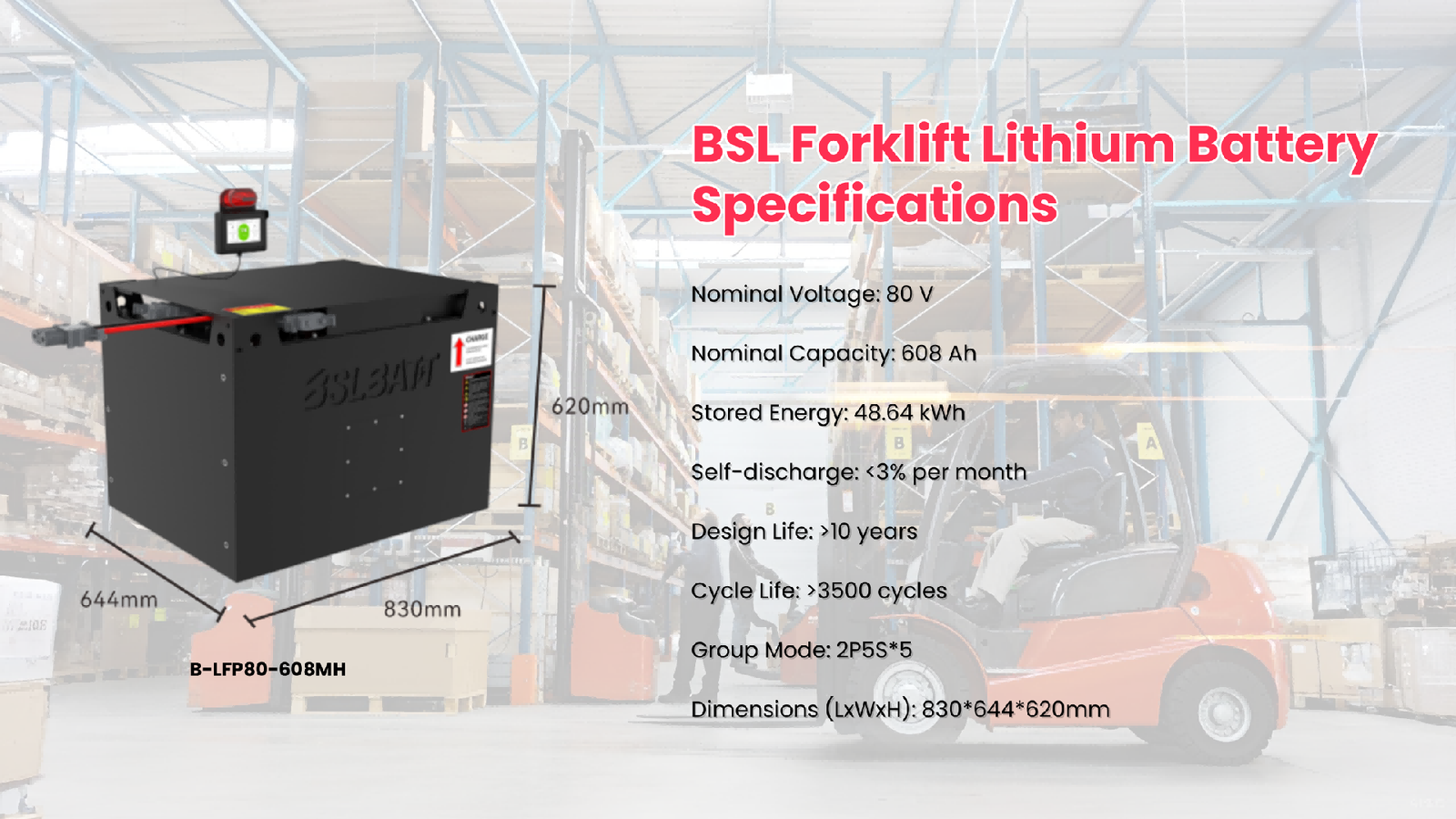
When evaluating forklift battery specifications, it’s not only about voltage, capacity, weight, and size. Other performance factors directly affect daily operations and overall cost efficiency. Elements such as charging time, lifespan, cold storage performance, and space requirements determine how well a battery fits your equipment and workflow. To gain a full understanding of these technical details, you can also refer to our forklift battery specifications guide.
Charging Time
Voltage and capacity are the most important specifications when selecting a forklift battery. Choosing the correct voltage based on the forklift type ensures safe and efficient operation:
· 24V – Small equipment like pallet jacks and walkie stackers
· 36V – Medium-duty forklifts, including narrow aisle trucks
· 48V – Larger counterbalance electric forklifts
· 80V – Heavy-duty forklifts and airport ground support equipment
Along with voltage, capacity (Ah) should also be considered. Higher capacity batteries deliver longer operating times but may increase weight and size. The best choice balances voltage and capacity to match both your equipment’s requirements and your daily workload.
Charging Time
Charging time is very important for forklifts. Lithium-ion batteries charge much faster than lead-acid ones. Most lithium-ion batteries get a full charge in 1 to 3 hours. By contrast, lead-acid batteries usually need 8 to 12 hours to recharge fully, plus several more hours for cooling before they can be used again. This means a lead-acid battery may take nearly a whole day before it is ready.
Workers can charge lithium-ion batteries during short breaks without harming battery life. Fast charging helps forklifts work longer and cuts down on waiting. This flexibility makes lithium technology ideal for warehouses that run multiple shifts.
Lithium-ion batteries: 1–3 hours for a full charge
Lead-acid batteries: 8–12 hours charging + 6–8 hours cooling
For safe and efficient charging, it’s important to follow the right steps. Check out our essential safety tips for forklift battery charging to keep your team protected and equipment running smoothly.
Lifespan
How long a battery lasts matters for companies. Lithium-ion batteries last much longer than lead-acid ones. The table below shows how many times each battery can be charged and how many years they last:
Battery Type | Charge Cycles | Years of Use (Single Shift) |
|---|---|---|
Lead-Acid | 1,000–1,500 | ~5 years |
Lithium-Ion | 2,000–3,000 | ~10 years |
Batteries that last longer need to be replaced less often. This saves money over time.
Cold Storage Performance
Cold places make it hard for batteries to work well. Lithium-ion batteries do better in the cold than lead-acid ones. They keep more power and work better when it is cold. The table below shows how both types work in cold storage:
Feature | Lithium-Ion Batteries | Lead-Acid Batteries |
|---|---|---|
Capacity Reduction | 30%–50% below 0°C | Big drop in how well they work |
Charging Speed | About 30% faster than lead-acid in the cold | Much slower in cold places |
Stability | More stable and works better | Less stable, more problems |
Energy Density | 3–4 times higher | Lower |
Cycle Life | 2–3 times longer | Shorter |
Lithium-ion batteries help forklifts keep working in cold storage. This makes them a good pick for cold warehouses.
Space Requirements
Warehouse space is important. Lithium-ion batteries use less space than lead-acid ones. They do not need special rooms for charging or extra space for spare batteries. Workers can charge lithium-ion batteries anywhere on the warehouse floor. This saves space and lets companies use the warehouse in new ways. Extra space can be used for more products or other tools.
Choosing the Right Forklift Battery
Operational Needs
Each warehouse has its own needs. Managers should pick batteries that fit work shifts and how much work is done. They also need to think about how much downtime is okay. Warehouses with many shifts need batteries that charge fast and do not need much care. The table below shows what busy places should look for:
Factor | Lithium-Ion | Lead-Acid |
|---|---|---|
Charging Time | 1–4 hours | 8–10 hours |
Maintenance | Little to no maintenance | Regular watering and cleaning |
Lifespan | Thousands of charge cycles | Hundreds of charge cycles |
Cost | Higher upfront, long-term savings | Lower upfront, higher long-term costs |
Tip: Warehouses with many shifts get the most from lithium-ion batteries. These batteries cut down on waiting and last longer.
Facility Readiness
The warehouse must be ready for the battery type. Managers should check if there are charging spots and good airflow. Lithium-ion batteries do not need special rooms or vents. Lead-acid batteries need their own safe charging area. Switching to lithium-ion can give more space and help work move faster.
Battery Compatibility
Not all forklifts can use every battery. Managers need to check the forklift’s details before changing batteries. They should make sure:
The battery’s power and voltage match the forklift.
The charger works with the battery type.
The forklift’s software may need updates for lithium-ion batteries.
Operator Training
Operators must learn how to use new batteries safely. When using lithium-ion batteries, managers should:
Teach workers how to handle and change lithium-ion batteries.
Show staff how to charge them and spot problems.
Tell teams what to do if something goes wrong.
Good training keeps workers safe and helps batteries last longer. A trained team learns new things fast and keeps the warehouse running well.
Forklift Battery Disposal & Recycling

Lithium-ion Disposal
Lithium-ion forklift batteries need special care when thrown away. These batteries have important metals inside. Recycling lithium-ion batteries is not as common as lead-acid batteries. Most recycling places do not take lithium-ion forklift batteries. Only a few centers can recycle them safely. This makes getting rid of them harder.
Battery Type | Recycling Rate |
|---|---|
Lead-Acid Batteries | Up to 99% |
Lithium-Ion Batteries | Less than 15% |
Many lithium-ion batteries end up in storage or landfills. This can hurt the environment if not handled right. Companies should use certified recyclers who know safe ways. Some battery makers have take-back programs. These programs help keep batteries out of landfills and save useful materials.
Lead-acid Disposal
Lead-acid batteries have been recycled for a long time. Almost every part of these batteries can be used again. The recycling rate for lead-acid batteries is up to 99%. This makes them one of the most recycled things in the world.
Aspect | Details |
|---|---|
Legal Requirement | Used lead-acid batteries must be managed as Universal Waste under CFR Title 40, Part 273. |
Hazard Classification | Defined as hazardous waste under Title 261.3. |
Environmental Impact | Improper disposal can lead to pollution of drinking water and food sources. |
Health Risks | Lead exposure can cause severe health issues, particularly in children. |
Legal Exposure | Companies must obtain a Certificate of Recycling to avoid legal repercussions. |
Penalties | Violations of the Battery Act can incur fines up to $10,000. |
Companies must follow strict rules when getting rid of lead-acid batteries. They need to use approved recycling centers and keep records. Good handling stops pollution and keeps workers safe.
The material handling industry now works on:
- Recycling more to help the planet.
- Cutting down on waste and making battery disposal safer.
- Making better recycling technology and building new centers.
- Setting up strong systems to collect and reuse old batteries.
Conclusion & FAQ
Lithium-ion batteries are best for places with many shifts, cold storage, or lots of use. Lead-acid batteries work well for one shift or if saving money is important. Companies should think about the full cost, safety, and how much care is needed. Every warehouse is different. Talking to battery experts can help pick the best battery.
What is the main advantage of lithium-ion forklift batteries?
Lithium-ion batteries charge quickly and need little care. They help save time and lower work costs. Warehouses with many shifts often pick them.
Can you use a lithium-ion battery in any forklift?
Not all forklifts can use lithium-ion batteries. Operators should ask the maker to check if it fits. Battery size, voltage, or software might need changes.
How often should lead-acid forklift batteries receive maintenance?
Lead-acid batteries need fluid checks every week. Workers must add water and clean them often. Equalization charging should happen once a week. Good care helps batteries last longer and keeps workers safe.
Are lithium-ion forklift batteries safe for indoor use?
Yes. Lithium-ion batteries do not make bad gases when charging. They have sealed cases and safety systems inside. Warehouses can charge them anywhere without special vents.
Which battery type is better for cold storage environments?
Lithium-ion batteries work better in cold storage. They lose less power and charge faster in cold places. Many cold storage warehouses use lithium-ion batteries for steady work.